
Michigan Prison Release Paths
The Michigan Department of Corrections operates the state-prison system. Iron County has no MDOC prison listed within the county. Still, a felony case from the 41st Circuit Court can result in commitment to a prison elsewhere in Michigan. Once MDOC receives the person, the county jail is no longer the right source for present prison location, parole status, or the end of state supervision. The county court remains the source for the judgment of sentence.
A prison exit can lead to parole, while final discharge comes later. Parole means the person has left a prison, camp, or center and remains subject to MDOC supervision. Discharge means the MDOC sentence or supervision has ended. OTIS commonly labels these events with “Date Paroled,” “Discharge Date,” and “Discharge Reason.” Read the status and dates together. A future date beside a prison location does not prove release.
| MDOC status or field | What it supports |
|---|---|
| Prisoner with a location | The person remains in MDOC custody |
| Parolee and Date Paroled | Prison exit to MDOC community supervision |
| Discharged with date and reason | MDOC supervision or sentence has ended |
| Earliest Release Date | Possible Parole Board jurisdiction, not a promised exit |
| Maximum Discharge Date | Outside sentence date if parole does not occur, subject to lawful changes |
Search Iron County MDOC Releases
OTIS is Michigan’s official offender-search route for prisoners, parolees, probationers under MDOC, and people discharged within the public retention window. It excludes county-jail prisoners, city lockup cases, and jail-only sentences. That boundary matters in Iron County because the jail has no public online roster. A failure in OTIS does not prove the person was never held at the county facility.
Use an MDOC number when available. It is the strongest search key. A name search can be narrowed through other public fields:
- Open “Start Offender Search” and enter the MDOC number, or use last and first name.
- Narrow results by status, sex, race, age, scars or marks, and aliases when those fields help.
- Open a possible match and compare the MDOC number, descriptors, aliases, convictions, and sentencing county.
- Read status, location, Date Paroled, Discharge Date, and Discharge Reason as one record.
An offense tied to Iron County can connect the state record to the local judgment, although one person may have sentences from several counties. Verify the specific conviction in MiCOURT or through the 41st Circuit Court. The court file explains the sentence. OTIS explains the MDOC phase.
The successful manifest capture comes from the official OTIS search application.
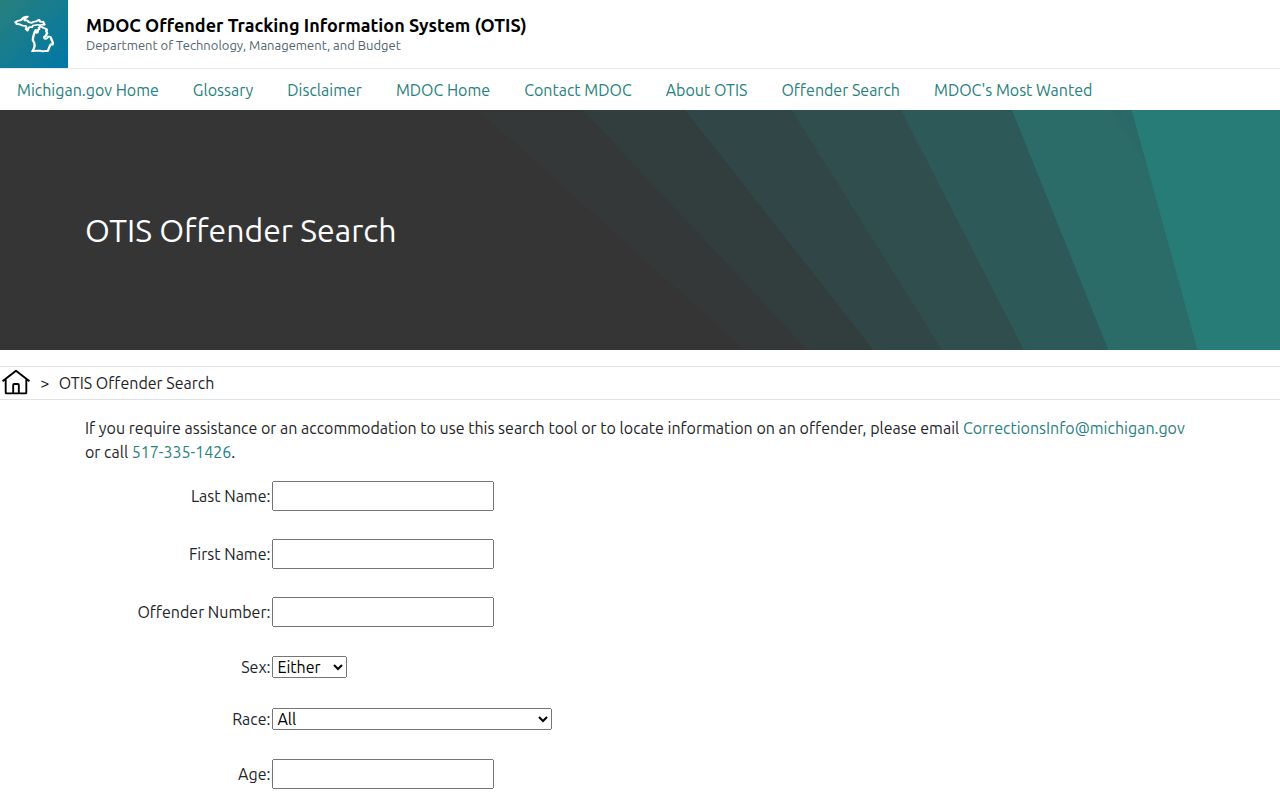
The fields on that screen let a search begin without knowing the institution, which is especially useful because Iron County has no local MDOC prison.
Iron County Prison Release Dates
Michigan uses indeterminate sentencing for most state-prison terms. In plain terms, the court sets a minimum while law supplies the maximum. The Earliest Release Date generally marks the point when the minimum is satisfied and the Parole Board may have authority to act. It is not an appointment for release. The Maximum Discharge Date describes the outside sentence date if parole does not occur, subject to lawful sentence calculation and later changes.
Michigan’s truth-in-sentencing rule for covered cases requires service of the full judicial minimum before parole consideration. A generic national percentage should not be applied. The Parole Board decides whether release is suitable after jurisdiction begins. A grant can also require time for release planning and can be affected by later facts or misconduct. The verified prison-exit field is Date Paroled, not the earlier eligibility field.
The MDOC FAQ on prisoner release dates explains these labels. A sentence calculation question may require a focused MDOC record rather than inference from the public display.
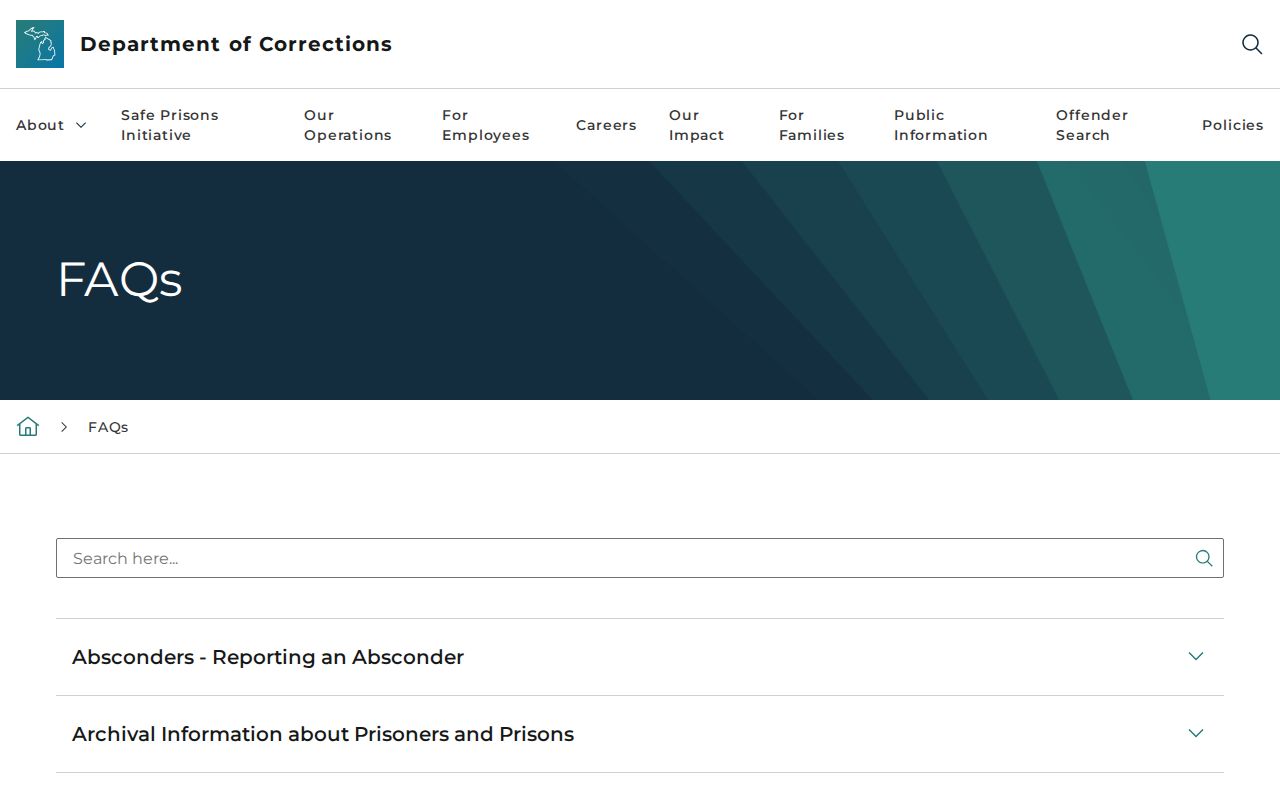
This official explanation helps separate a projected or eligibility date from the later event that proves prison exit.
Iron County Discharge Record Window
OTIS keeps a discharged profile public for three years after supervision ends under MDOC’s stated policy. After that window, a clean result cannot establish that an older person was never imprisoned or supervised. Set-aside action can also affect public visibility. Online disappearance is not the same as destruction of every source record.
For an older or more exact Iron County state-prison release, combine the sentencing-court file with a focused MDOC records request. Ask for a discharge certificate, release-status record, parole order, time-computation material, or photograph as needed. MDOC’s FAQ also describes PENPACK records, but access to a PENPACK is restricted to recognized criminal-justice authorities for official use. A general requester should use FOIA for specifically identified, nonexempt records.
- Parole
- Release from prison under MDOC supervision while the sentence continues.
- Discharge
- The end of MDOC supervision or sentence.
- Eligibility date
- A date when legal consideration may start, not proof of exit.
- Set-aside
- A court process that changes the public status of an eligible conviction.
Note: Michigan’s three-year OTIS display window is not a universal MDOC record-destruction rule.
Michigan Prison Release Records
Direct a state-prison records request to MDOC, not the Iron County Sheriff. Give the person’s full name, MDOC number, date range, Iron County case number if known, and the exact record sought. A narrow request helps staff distinguish the discharge certificate from the parole order, sentence computation, or photograph.
MDOC FOIA CoordinatorP.O. Box 30003
Lansing, MI 48909
517-335-4194
Fax: 517-335-4193
MDOC-FOIA@michigan.gov
MDOC FOIA process
MDOC also lists Corr_Records_Info@michigan.gov for current-prisoner records and MDOC-Records_Retention@michigan.gov for past-prisoner assistance up to six years after release. That assistance period differs from the OTIS public display window. It should not be treated as a guarantee that every requested item exists or is releasable.
Most OTIS information comes from court records. Route a court-derived error to the sentencing court. Route a supervision or absconder-status question to the listed parole or probation office. MDOC provides correctionsinfo@michigan.gov for inaccurate, outdated, or incomplete public information and mdocwebmaster@michigan.gov for technical problems.
Iron County Custody Boundaries
A state-prison page must not turn an Iron County jail stay into an MDOC record. Jail-only custody is confirmed through Sheriff Ryan Boehmke’s office, the court case, MI-VINE, and the county release record. State-prison custody is confirmed in OTIS and MDOC files. Federal custody belongs in BOP or the federal docket. Immigration custody belongs in ICE’s locator when the facts support that path.
The same person may pass through more than one system. A county release line showing transfer to MDOC proves departure from the jail, not release to the community. OTIS then shows the state phase. When parole begins, its date supports prison exit. When discharge occurs, the discharge fields support the end of MDOC supervision.
OTIS result fields can include the MDOC number, name, photograph when available, status, location or supervising office, sentence and offense data, sentencing county, earliest release date, maximum discharge date, parole date, discharge date, and discharge reason. The precise display varies with sentence and status. A supervising office beside a parolee can help route a current verification. A prison location beside a future date means the person remains in state custody.
Photographs require the same restraint. MDOC says some older or otherwise unavailable images will not appear. An OTIS photograph documents the MDOC record, not the separate appearance at Iron County booking. A missing photo does not negate the state record. Compare identifiers, aliases, physical descriptors, convictions, and sentencing county before deciding that a result belongs to the person sought.
OTIS also includes searchable parole-absconder and probation-absconder status options. An absconder is a person reported as not complying with required supervision contact. That label signals a supervision issue; it does not prove present custody at the county jail or a state prison. Use the listed field office for the current supervision record and the sentencing court for errors derived from the court file.
The Michigan Parole Board is the sole paroling authority for felony offenders committed to MDOC. Eligibility does not guarantee release. A favorable decision also does not prove a same-day exit because release planning must be completed and later information can affect the grant. Wait for Date Paroled or obtain the appropriate MDOC record when the physical release event is the question.
The Iron County released-inmates search path places these systems in order for a named-person inquiry. Match identity with numbers and case data, not a photograph alone.